Choosing a medical alert for seniors comes down to four things: where your loved one spends their day, whether they want automatic fall detection, who answers when the button is pressed, and whether they will actually wear it. Get those right and the rest is details. This guide walks through each one in plain language, with six questions to ask before you decide.
What is a medical alert system?
A medical alert system is a small device with a help button that connects an older adult to a trained person who can send help, any time of day. The National Institute on Aging (NIA) describes these systems as an electronic monitor a person wears that "alerts emergency personnel when a person becomes lost, falls, or needs urgent medical assistance."
Most systems are worn as a pendant on a necklace or a band on the wrist. NIA's fall-prevention advice lists them as one option: you push a button on a special necklace or bracelet to call for help.
Why families look into one: the CDC reports that more than one out of four older people falls each year, but less than half tell their doctor. A medical alert doesn't prevent falls, but it means help is one press away if one happens – or if anything else goes wrong.
Start with daily life: in-home or on the go?
The right system follows your loved one's routine. Picture an ordinary week and ask where they spend it.
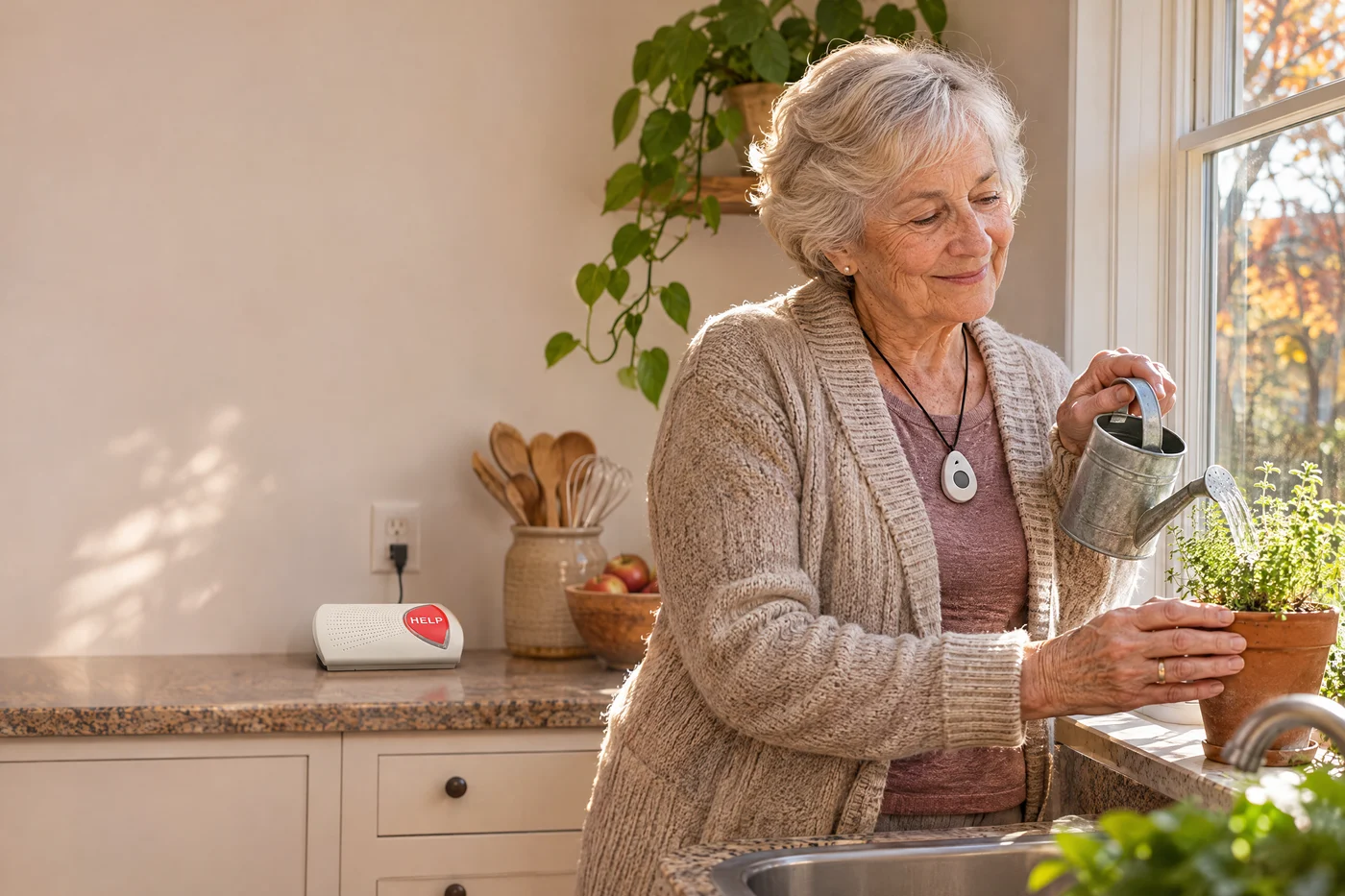
- Mostly at home? An in-home system covers the house and yard, with a base unit that lets your loved one talk with the operator from across the room.
- Still driving, walking, shopping or volunteering? An on-the-go device with GPS goes along to the store, the park, church or the doctor, so help can find them away from home too.
- Both? Many active seniors want coverage in both places.
With 24 Rescue Alert, both options work without a landline, so you don't need a home phone line to get started.
Does your loved one need fall detection?
Automatic fall detection is a sensor that can recognize a likely fall and call for help even if the button isn't pressed. It's worth considering for someone who lives alone, has fallen before, feels unsteady, or might not be able to reach the button.
The CDC notes that falling once doubles your chances of falling again, so a past fall is a good reason to ask about it. Keep expectations realistic: no sensor recognizes every fall, so the help button is still the main way to call. Fall detection is an extra layer, and with 24 Rescue Alert it is available for families who want it.
Who answers when the button is pressed?
This is the question that matters most, and the one families most often forget to ask. When the button is pressed, you want a trained person to answer quickly and talk with your loved one through the device.
Here is how it works with 24 Rescue Alert:
- Your loved one presses the button (or fall detection calls).
- A U.S.-based operator answers, 24 hours a day, 7 days a week, and talks with them through the device.
- The operator contacts family or 911 as needed, based on what is happening.
Ask any provider to walk you through these steps and to tell you exactly who is on the contact list.
Will they wear it? Comfort and ease matter
The best medical alert is the one your loved one wears every day. NIA points out that these systems must be set up correctly and worn by the older adult, and that batteries need to be charged or replaced as recommended.
A few practical checks:
- Is it light and comfortable as a pendant or on the wrist?
- Is the button easy to find and press, even without glasses?
- How often does it need charging, and how will they know?
- Can they wear it where falls often happen, such as the bathroom? Ask the provider.
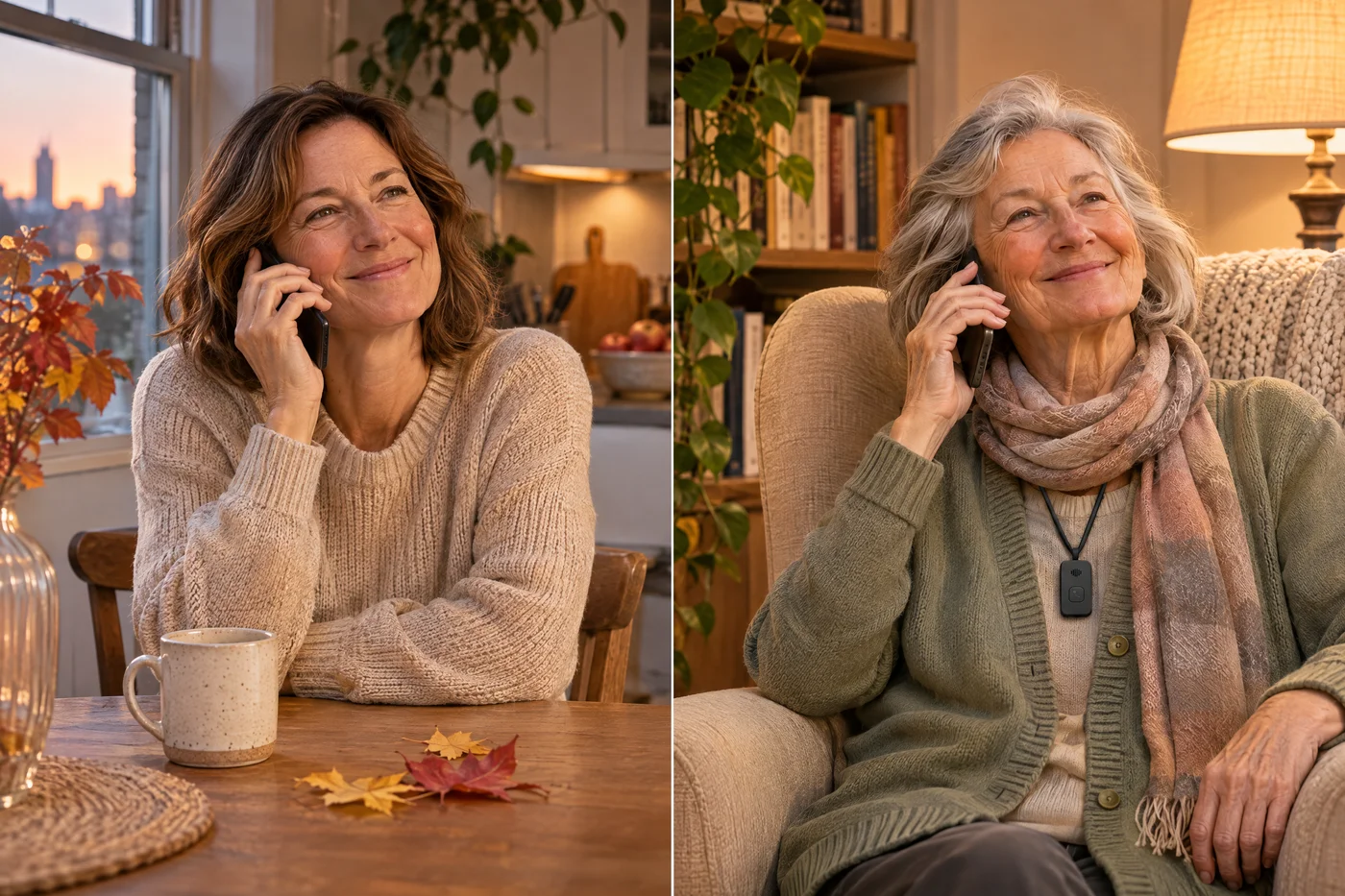
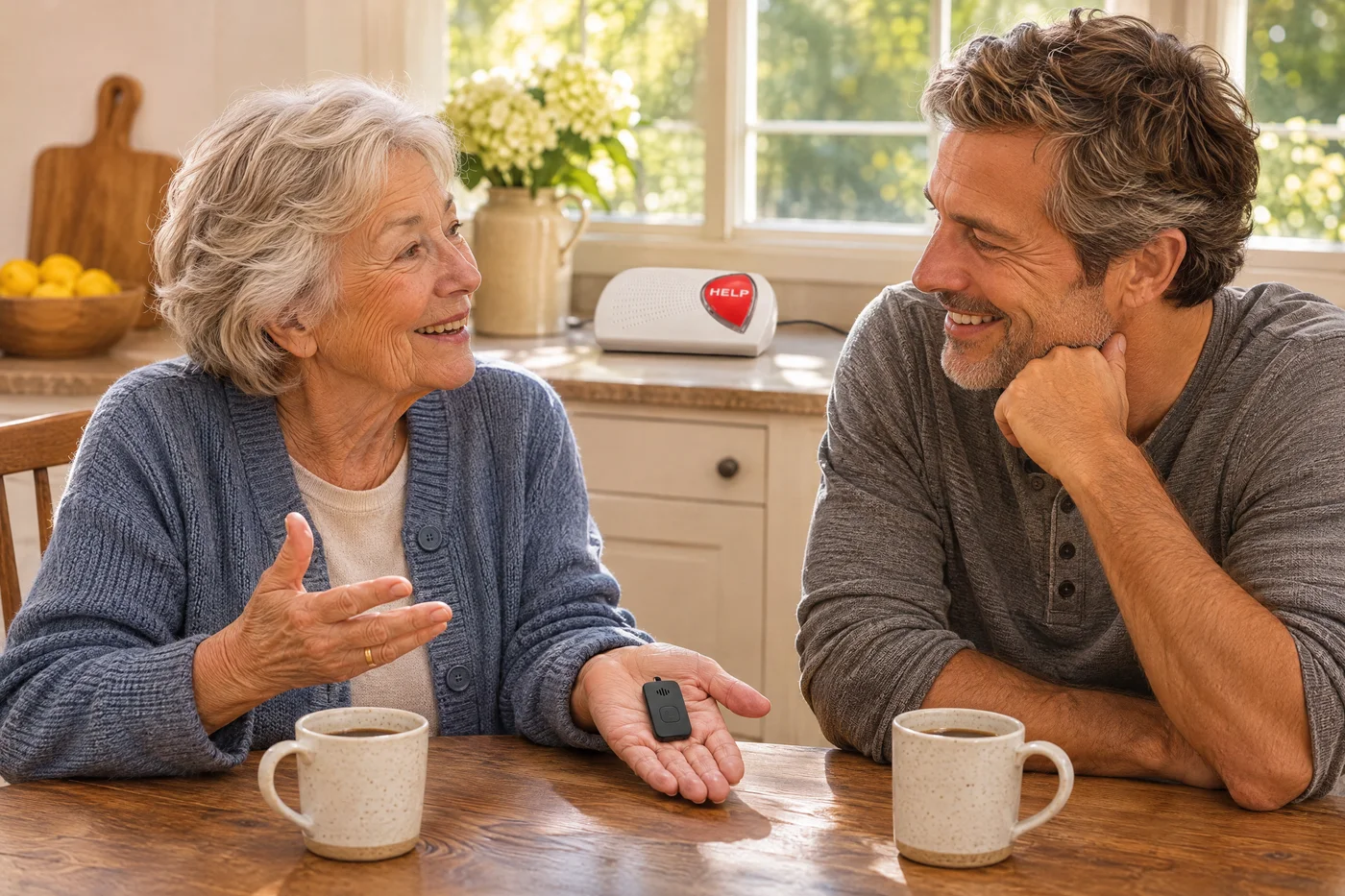
Involve your loved one in the choice. When they pick the style and understand how it works, they are far more likely to keep it on.
6 questions to ask before you choose
- Does it work at home, on the go, or both?
- Do I need a landline?
- Is automatic fall detection available?
- Who answers the call, and are they available 24/7?
- Who gets contacted after the operator talks with my loved one?
- Can we try it first, and is there support in our language?
With 24 Rescue Alert, the answers are: at home and on the go; no landline needed; fall detection available; 24/7 monitoring by U.S.-based operators; family or 911 as needed; a 30-day risk-free trial, free standard shipping and Spanish support.
What a medical alert can and can't do
NIA is clear that emergency medical alert systems "won't be useful in every kind of emergency" and can't replace regular check-ins by family, friends and other caregivers. That is the right way to see it: a medical alert is one part of a plan that keeps someone independent at home, alongside people who care, a safer home and regular visits.
NIA also suggests keeping a well-charged cordless or mobile phone close at all times. A worn button simply makes help easier to reach in the moments when a phone isn't.
Frequently asked questions
What is the best medical alert for seniors?
The best one fits your loved one's daily life: in-home if they mostly stay home, on-the-go with GPS if they are active, with fall detection if they live alone or have fallen before, and 24/7 monitoring by a trained operator.
Do medical alert systems need a landline?
Not all of them. 24 Rescue Alert systems work without a landline, at home and on the go.
What happens when you press a medical alert button?
With 24 Rescue Alert, a U.S.-based operator answers 24/7, talks with your loved one through the device, and contacts family or 911 as needed.
Is fall detection worth it?
It is worth considering for someone who lives alone, has fallen before or feels unsteady. It adds a way to call for help if the button isn't pressed, but no sensor catches every fall, so the button stays the main way to call.
Your next step
You don't have to decide today. Start by reading about the options together.
Get the free printed guide – mailed free; it usually arrives within 5–7 business days by U.S. mail.
Talk to a specialist for free
No obligation, Spanish support available. 30-day risk-free trial · free standard shipping.
Related reading: Medical Alert vs. Smartphone · Aging in Place · 10 Common Reasons Older Adults Fall
Sources
- CDC – Facts About Older Adult Falls
- National Institute on Aging – Services for Older Adults Living at Home
- National Institute on Aging – Falls and Fractures in Older Adults: Causes and Prevention
Statistics: Source: CDC; National Institute on Aging. These organizations do not endorse 24 Rescue Alert. This article is general information, not medical advice. In an emergency, call 911.